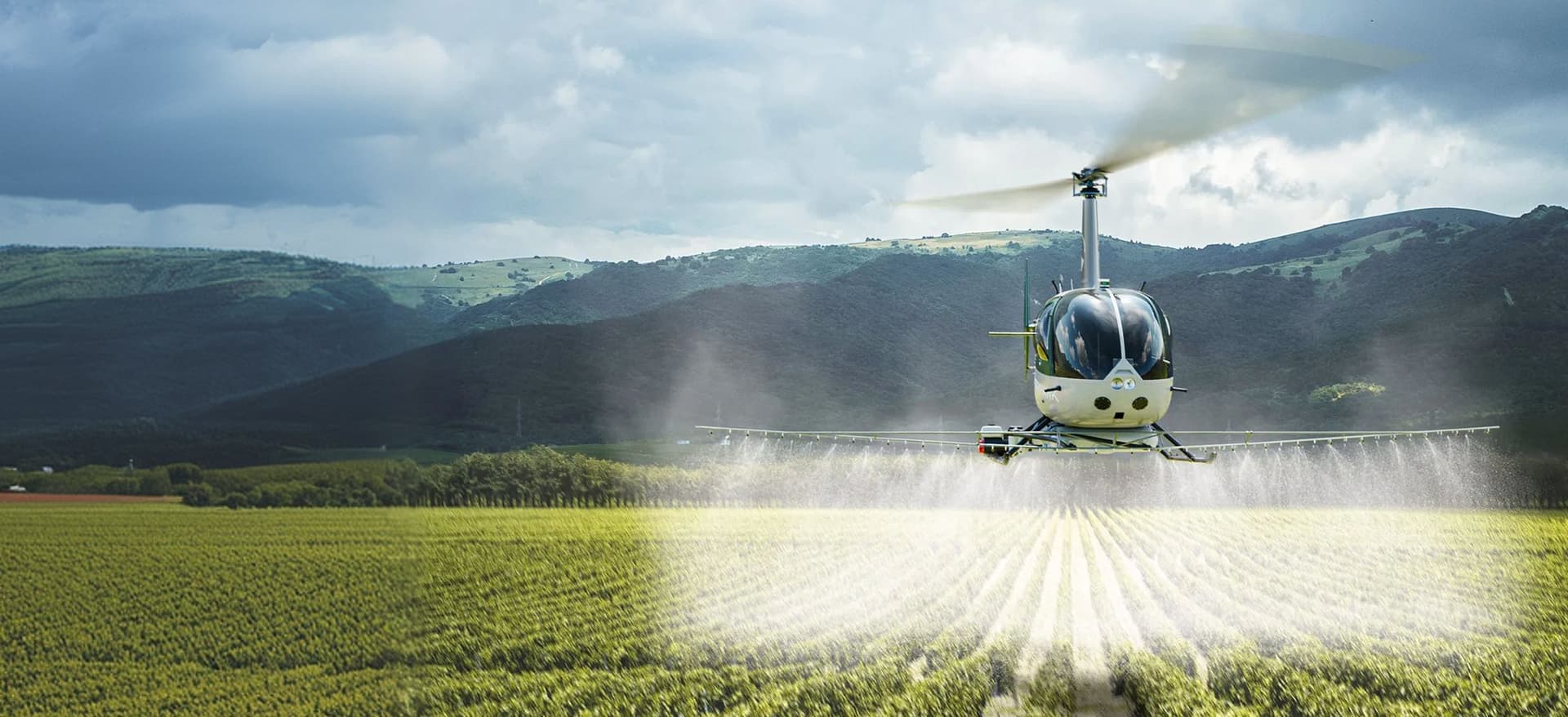
Unmanned Missions
Agriculture Monitoring & Spraying
Real-time aerial data to optimize crop health and yield
Agricultural and environmental operations demand consistent, repeatable insight — often across large areas, tight seasonal windows, and challenging conditions. No single aircraft – manned or unmanned – solves every agricultural challenge. Robinson Unmanned UAS are purpose-designed to support these missions by reducing human risk, improving data quality, and enabling scalable aerial operations across the full agricultural lifecycle. Match capability to task by integrating small and large UAS with existing manned operations without changing operational philosophy or infrastructure.
SMALL UAS
Rapid Insight, Targeted Action
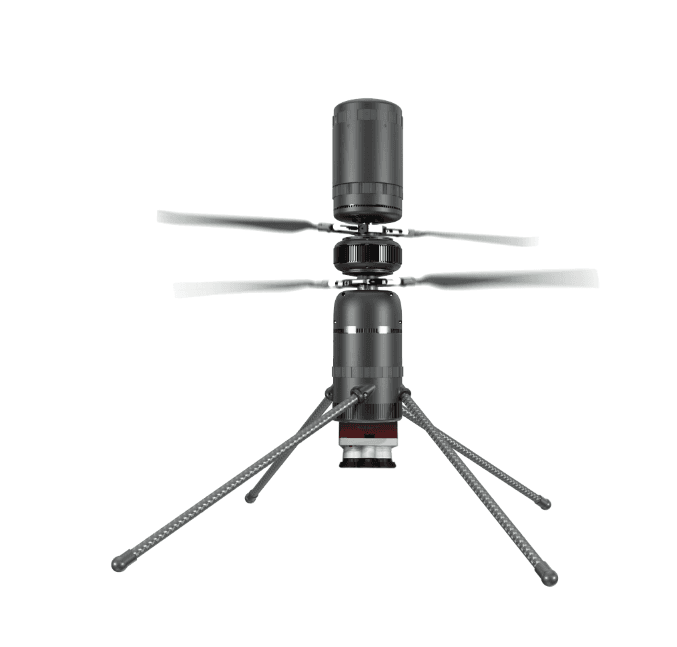
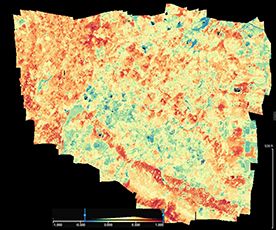
Spirit + MicaSense RedEdge-P Multispectral Sensor
Compact unmanned aircraft are ideally suited for inspection, monitoring, and data-driven decision-making early and throughout the growing season. Robinson Unmanned SPIRIT and SPARTAN small UAS support agricultural missions by enabling:
- Frequent, on-demand field inspection
- High-resolution visual and multispectral data collection
- Early detection of stress, disease, or irrigation issues
- Targeted intervention planning to reduce unnecessary treatment
Learn more about the agriculture configuration
Deployed quickly and operated efficiently, small UAS allow operators to gather actionable insight at the pace agriculture demands
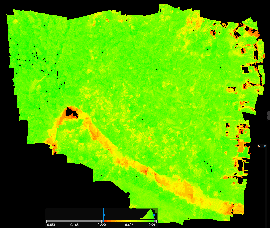
Digital Surface Model (DSM) captured with Sony ILX-LR1 Industrial Camera
LARGE UAS
High-Throughput Aerial Application at Scale
When intervention is required, larger unmanned aircraft like the R44 Sprayhawk enable precise, repeatable aerial application without exposing pilots to low-altitude, high-risk flight.
Large UAS deliver distinct advantages to agricultural spraying and treatment:
- High-capacity payloads reduce refill cycles and downtime
- Automated flight paths and terrain-following capability enable consistent application
- Precision flow control improves coverage and minimizes waste
- Reduced crew exposure during demanding or hazardous operations
Designed for sustained operations, large, unmanned platforms enable agricultural teams to scale application efficiently while maintaining accuracy and control.
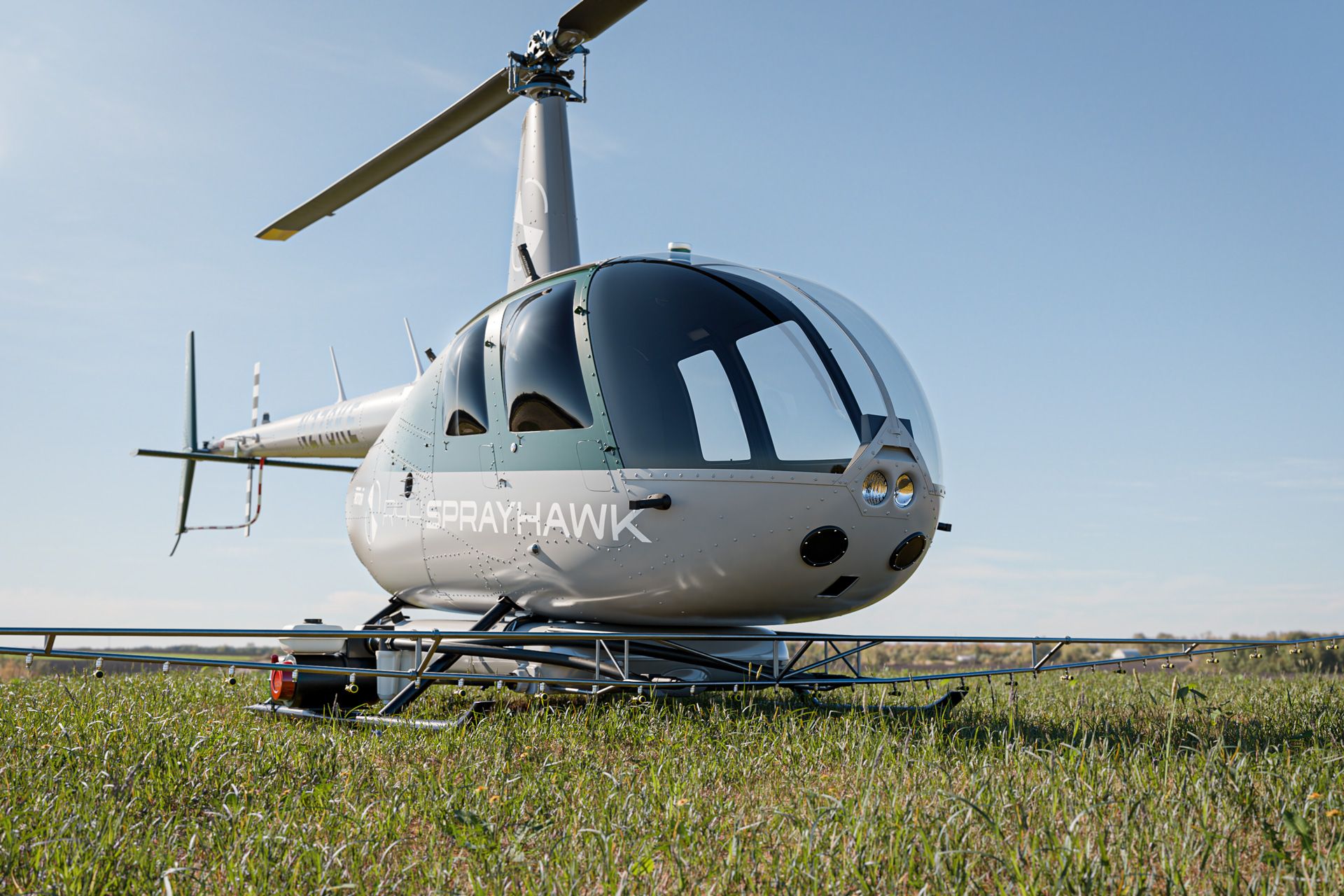
DESIGNED FOR REAL-WORLD CONDITIONS
Agricultural environments are dynamic, and often dangerous. Robinson Unmanned UAS are engineered to operate reliably in real-world conditions, supporting:
- All-weather performance
- Autonomous and semi-autonomous flight
- Integration with industry-standard planning and data systems
This operational reliability allows unmanned systems to become a routine, integrated part of agricultural workflows, improving efficiency, reducing risk and optimizing yields.
DATA THAT ENABLES ACTION
By incorporating inspection, monitoring, and aerial application into a cohesive unmanned workflow, agricultural operators can:
- Improve crop yields through earlier detection and intervention
- Reduce chemical and water usage through targeted application
- Increase operational efficiency during critical seasonal windows
- Enhance safety by removing pilots from low-altitude spraying missions
Unmanned aviation enables agriculture operations to move from labor-intensive reactive response to proactive management — at scale.
WHY ROBINSON UNMANNED
Robinson Unmanned applies aviation-grade design principles across its unmanned platforms, enabling dependable performance from small inspection aircraft to large application systems. This shared foundation supports a scalable, integrated approach to agriculture and environmental missions without forcing operators to adopt fragmented tools or workflows.